


3D UI/UX Design Guide 2025: How to Build Immersive, Intuitive, and Interactive Experiences
Sharing
What is UX? Where did UX come from? Why is it important to learn about UX? UX is an extremely important field not only in design but also related to brand development. This article will help readers understand the concept of User Experience – UX.
According to research by Kinsta, 70% of online shoppers will abandon a transaction if they have a bad experience with a website. And based on statistics from Toptal, 88% of users will not return to a website/application with a bad interface or slow loading speed.
It’s easy to see that people don’t like websites or products that don’t meet their expectations. In other words, brands that provide a poor user experience will quickly be eliminated from the game. Here, the key phrase is: user experience, or UX (User Experience).
UX is a term that is still unfamiliar to those new to design or who have never “hands-on” in this field. However, in Vu’s opinion, everyone should understand what UX is, because it is not only used in design but also appears in many other stages of the brand building and development process.
What UX is is also often confused with the term UI (User Interface). Although UX and UI are closely linked, they have completely different characteristics.
In this article, Vu will explore with you the concept of what UX is, the history of UX, the importance of UX, and how to distinguish between UX and UI. However, to understand in detail what UX is and the UX design process requires a large amount of knowledge, and Vu cannot share everything with you within the scope of one article. Therefore, the Vu Digital team will select and send to readers what we believe is important and useful. As usual, let’s start by answering the question “What is UX?”
What is UX: Definition
UX is an abbreviation for “User Experience.” UX is the relationship between a brand’s product and the people who use that product. UX encompasses all aspects related to feelings and thoughts when users interact with a product, website, application, etc.
From this, we can understand UX Design as the process of creating a complete and useful experience for users when they use a product, aiming to bring satisfaction and connect users with the brand. UX Designers will put users at the center and propose solutions to optimize their experience.
UX is increasingly important and is an indispensable factor in product development and design. Apple co-founder Steve Jobs once said:
“Design is not just what it looks like and feels like. Design is how it works.”
Let’s relate this to how we use the internet.
Early websites were often very simple, their only task was to provide information with a rather rudimentary interface. This is understandable as our needs for the internet at that time were not many. In the 2000s, social media was something distant, and it wasn’t until 2014 that YouTube had an official domain name in Vietnam.
But the story of 2022 is completely different. Now, Facebook is the first thing we check when we wake up. TikTok and YouTube have become effective “mental medicine” for everyone after many hours of stressful work. In other words, our current lives are closely linked to technology.
As a natural consequence, users increasingly demand more from websites or applications. They want faster loading speeds, higher quality images, more modern interfaces, etc. The line between “satisfaction” and “disappointment” has become more blurred than ever. Things that displease users when interacting with a brand affect their attitude and feelings towards the brand. From there, the role of a UX Designer becomes even more prominent and necessary.

However, the concept of what UX is is not limited to the field of website, app, or technology product design. UX encompasses a much broader meaning.
Every brand, every product offers an experience process, and users will have their own feelings when using them. Is that a positive, negative, or neutral feeling? This depends on the product development process, communication methods, and how the brand helps users solve problems.
Imagine you just bought a bottle of mineral water at the store, but the bottle is too slippery for you to hold securely, or the cap is too difficult to open. You feel annoyed and tell yourself that you won’t buy this brand again next time. Later, when you see the bottle, unpleasant memories immediately come to mind, and you recount the story to your acquaintances, advising them not to buy this product because it is very slippery and difficult to open.
Worse, not only you but many others also encounter the same situation. So the story of the “slippery bottle and the hard-to-open cap” spreads. This mineral water brand suddenly loses points completely in the eyes of users. This is how a product with poor UX affects our perception process.
Another issue that many people wonder about is why the abbreviation for User Experience is UX and not UE. The simple reason is that the word “Experience” in English is pronounced /ɪkˈspɪəriəns/ with “ex-” sounding like the letter “X”. People have therefore become accustomed to reading and writing “User Experience” as UX, and this term is still used today.
In summary, UX is an essential component for the success of a brand. Understanding what UX is is the first step for designers to build user-friendly and suitable products.
What is UX: A Brief History of UX
When learning about what UX is, we often associate it with technical issues. This leads many to believe that UX is a “modern” term that has only recently emerged.
In fact, although the concept of “User Experience” was only officially used in the 1990s, our ancestors applied many different ways to create experiences for people.
In Vu’s opinion, to better understand what UX is, readers need to grasp the history of this field. But why go to such lengths? Isn’t memorizing the definition of UX enough for us to go for an interview?
Theoretically, the history of UX plays an important role in our understanding of what UX is. Like any other field, exploring the origins of an object or event will give us more knowledge. Whether you are just starting to learn about UX or are an experienced Designer, this content will bring you many new perspectives.
4000 BC: Feng Shui and Spatial Arrangement
You might wonder what the art of Feng Shui has to do with UX? But the following sharing might make you reconsider.
More than 6000 years ago, ancient Chinese people studied the influence of wind direction, air currents, and water veins on human life. They believed that the space of a bedroom, living room, or an entire house needed to be arranged and designed in a certain order so as not to hinder the flow of energy – the thing that brings safety and luck to the homeowner.

Just as a Feng Shui expert arranges furniture in a house, a UX designer also applies similar principles to build user-friendly applications or websites. The “energy flow” is understood by modern designers as “user flow” – the process a user goes through when using a product, from opening the application to exiting.
Both aim for the same result: creating a complete experience for the user. Based on this, it can be said that Feng Shui is one of the first forms of “UX design” to appear in history.
5th Century BC: Ancient Greeks
Calculations regarding the creation of experiences also appeared in ancient Greek society. Based on collected documents, scientists believe that around the 5th century BC, the Greeks created tools and working environments that best suited the needs of workers.
One of the signs proving that the ancient Greeks were aware of the principles of experience is Hippocrates – the father of medicine – analyzing how to set up a surgeon’s workplace.

In a collection of notes, Hippocrates wrote about the light in the room, the doctor’s position – “the doctor should sit or stand in a position where he feels comfortable” – and the arrangement of surgical instruments; “They must be easily accessible whenever required, and they must be placed correctly so as not to obstruct the doctor.”
Doesn’t this remind you of UX design concepts?
1940s: Toyota Production System
Around the 1940s, Toyota launched the Toyota Production System (TPS) with a focus on customers and workers.
Internally, the TPS system was built on the foundation of the company’s concern for employees, and a lot of investment was made to create the most effective working environment.
At the same time, employee contributions were also encouraged and respected. A factory worker could completely provide feedback to superiors if he discovered a machine malfunction and offer suggestions to improve the situation. These were things that were not common at the time.
Toyota’s production system marked an important step in the development of UX. It showed that people were beginning to pay more attention to the process by which a person interacts with and uses machinery.
1955: Henry Dreyfuss and the Art of Designing for People
A significant figure in the history of UX design is Henry Dreyfuss. Dreyfuss was an American industrial engineer, famous for designing and improving the usability of consumer products such as Hoover vacuum cleaners and desk phones.
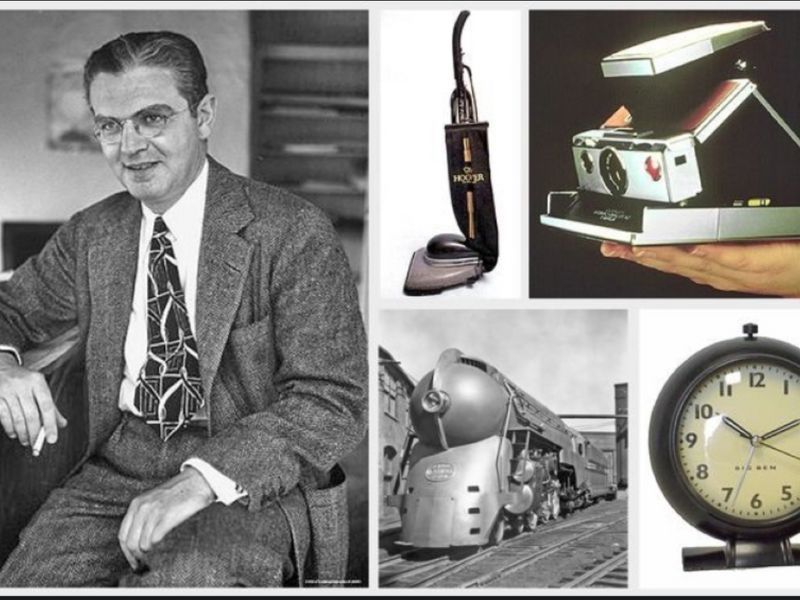
Dreyfuss’s creative philosophy was based on scientific and user-friendly approaches. In 1955, he wrote the book “Designing for People.” In it, Dreyfuss described the success of a product designer as when the user “feels safe, comfortable, positive when buying and using the product.” Conversely, if the user feels difficult or unenthusiastic when using the product, it means the designer has made a mistake.
1966: Walt Disney & Disney World
We often mistakenly think that engineers are the only ones who played a major role in the history of UX development. But in fact, Walt Disney – the person behind the success of the entertainment brand of the same name – is considered by many to be one of the first UX geniuses.
Disney was always passionate about creating the most magical, immersive, and enjoyable experiences for others, and Disney World is a testament to his excellence.
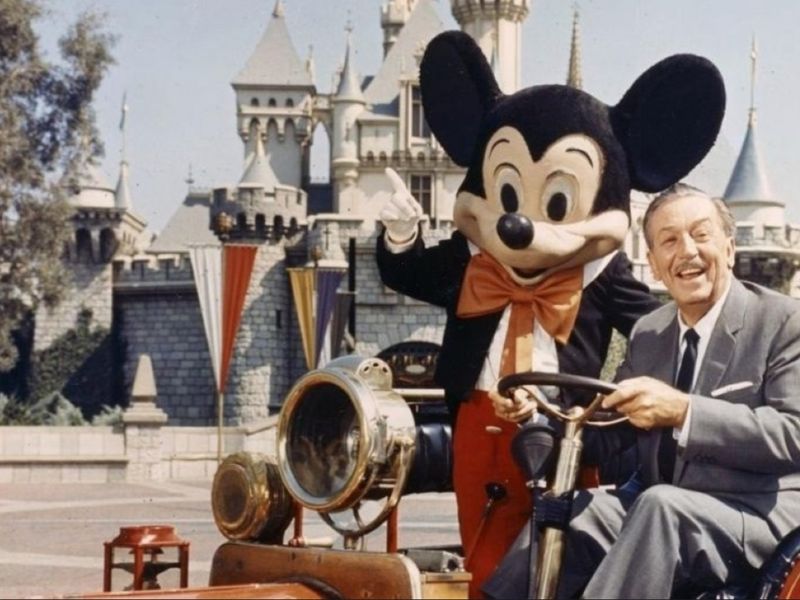
In his article for UX Magazine, Joseph Dickerson – a UX Designer at Disney – summarized the set of guiding principles that Walt Disney gave to his team of engineers: understand customers, understand their needs and desires, and then communicate with them through the colors, shapes, and textures of the works.
The result is that we now have a Disney World that every child wants to visit. Walt Disney’s principles are still applied in every UX design to this day.
1970s: Xerox, Apple, and the Personal Computer Era
The 1970s marked the birth of the personal computer. This was also when psychologists and engineers began to collaborate to create the most suitable product experience process for users.
The most breakthrough results at this time belonged to Xerox’s PARC research center, including the graphical user interface and the handheld mouse.
1984: Macintosh
Macintosh – Apple’s first mainstream computer – was equipped with a graphical user interface with an integrated screen and a separate mouse device. This was a historic milestone, because at this point everyone could own their own computer.
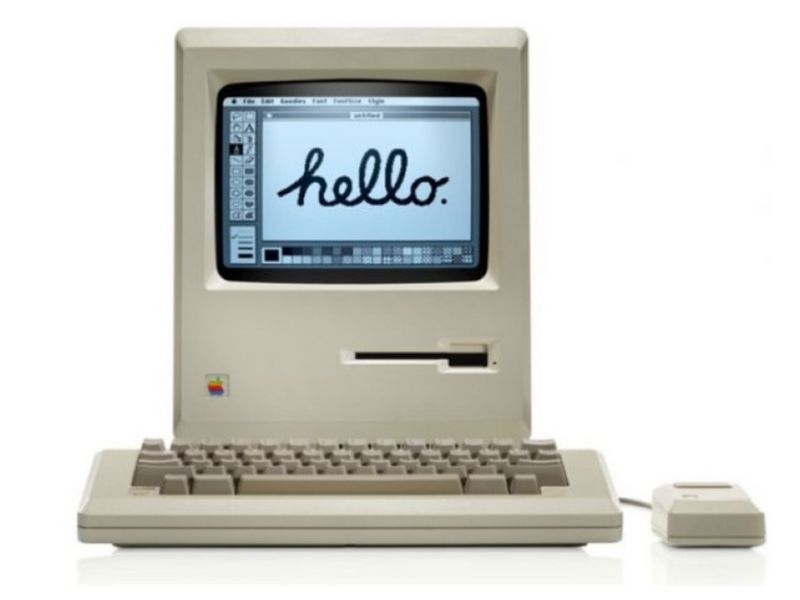
Since then, Apple began to focus more on UX in its products. And this brand has truly done a great job. From the iPod in 2001 to the iPhone in 2007, these names are almost always associated with the adjective “amazing” when it comes to their quality.
1995: Donald Norman and the Idea of “User Experience”
Around this time, UX design existed, but it did not have an official and specific name.
Until Donald Norman – a cognitive scientist – collaborated with Apple and took the title User Experience Architect. Norman became the first person to officially use the term User Experience, and he also used the term UX Design to refer to designing things related to user experience.

In 1998, Norman published the book “The Design of Everyday Things,” a work that UX Designers today should explore.
Present and Future
UX design is a constantly developing field. UX is tied to the speed of technological change, user needs, and its story continues to be written by us over time.
From artificial intelligence to audio technology, from virtual reality to 3D, today’s UX Designers face challenges that previous generations may never have imagined. Our task is to explore all the possibilities that UX can lead us to.
What is UX: Why is UX Important?
We have understood what UX is and the history of UX. But specifically, what is the importance of UX for a brand?
UX Helps Meet User Needs
If we were suddenly forced to use the first versions of Facebook, Google, YouTube, etc., we probably wouldn’t be able to stand it for more than 5 minutes. The reason is very simple. Because they lack so many features that people are familiar with today, such as Story and Video Call.
This proves that user needs are constantly changing, and they always demand to experience more user-friendly, more functional, and more complete versions of products.
They don’t want to use websites with font errors or e-wallet applications that take 5 minutes to load. According to research by Businesswire, nearly 90% of users will abandon a brand they love after just two bad experiences. Conversely, a product with good UX will make customers want to continue using it more.
A suitable example is Duolingo. Duolingo is a language learning support application with millions of users worldwide, and the way this application creates experiences that promote foreign language learning is also loved by many people.
Everyone knows that learning a language other than their mother tongue is a difficult challenge, especially for busy people. Vocabulary, grammar… just thinking about the prospect of doing homework every day can easily make us hesitate.

Duolingo offers experiences that make it easier for users to learn. The application’s solution is to break down the learning process into many different milestones, from easy to difficult. Along with setting simple goals like 10-20 minutes of study each day and reminders if they “accidentally forget,” Duolingo helps users not feel pressured when imagining the learning process.
On the other hand, the registration and usage interface of Duolingo is also very simple, supports many languages, has a friendly cartoon style, synchronizes results across both the application and the website (if using a computer), etc. All these things contribute to bringing a positive and effective experience to users.
The task of today’s UX Designers is increasingly challenging. But if the UX problem is solved, it will greatly benefit the brand.
Good UX helps customers connect with the brand
This is the result when we understand what UX is and effectively apply UX in our work. Good UX will help customers experience products and services and have a good feeling about that experience.
The world of brands today witnesses extremely fierce competition. On the racetrack, one person’s mistake will be another’s advantage. Every leader wants customers to have a good experience with their brand, because that is the basis for them to continue using it a second, third time, etc., and introduce the brand to others.
Customers have never had as many shopping options as they do now, and if a brand disappoints in the experience, they will immediately switch to using another product or, worse, negatively impact the brand’s reputation with the help of social media.
Competition among e-commerce sites is such a case. Customer care, return policies, promotions, product presentation systems, etc. These factors are invested in and improved over time by e-commerce brands to provide the best possible experience for users.
We will certainly be satisfied when a brand quickly and satisfactorily resolves the issue of wrong delivery. Conversely, just one negative point in the way a call center employee answers can lead to a post criticizing the brand on forums.
A good long-term experience will also help the brand gain more loyal customers. Take the example of Apple – one of the most successful brands in history.
Apple always focuses on users in all its activities and products. Steve Jobs, the company’s co-founder, was an expert in user experience. He always knew what customers needed, even when they didn’t realize it, and provided solutions for those needs. Apple’s products have always been famous for being easy to use and having a luxurious and beautiful design, from the iPod and iPhone to the iMac and iWatch.

Not only products, but also communication campaigns and Apple stores all provide customers with distinctly “Apple” experiences, something that no competitor can replicate. Other events, such as the company’s refusal to the US government’s request to unlock iPhones, have also created a great deal of trust for “the bitten apple.” Customers trust Apple and are satisfied with the quality when experiencing the brand’s products, and over time, they will become loyal customers and brand advocates for Apple.
UX Helps Save Costs
A product with good UX and highly rated by users will help the brand save a lot of costs in terms of editing or changing the design.
Many studies have shown that companies that invest in UX design will help reduce marketing costs, increase repeat purchase opportunities, and thereby significantly increase market share.
Based on Forrester’s statistics, a product with good UX has the potential to generate 10 times the brand’s investment. If we can address user needs and provide them with a great experience, the brand can be completely confident that they will continue to use the product.
Companies that do business but do not invest in website systems or customer care, which have already provided a poor experience, will find it very difficult to succeed in the long run.
Today’s users are very demanding, and as Vu shared, they will switch to “enriching” the brand’s competitors if they feel their needs are not being met.
What is UX: UX and UI
This is perhaps the question that many people wonder about most when exploring the concept of what UX is. UX and UI (User Interface) are very often confused with each other, even by those with experience in the design field.
Vu will dedicate a separate article to analyze the term UI in more depth. Within the scope of this article, Vu will provide an overview to help readers understand the difference between these two concepts.
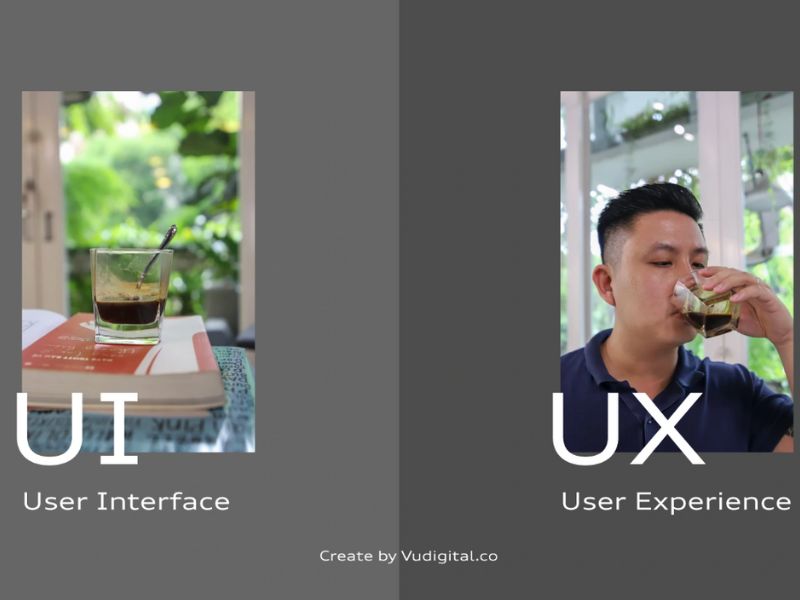
To summarize the difference between UI and UX, we can understand it as follows: UX is how users feel and think about a brand’s product, website, or application; while UI is how they interact with the interface and functions of that product, website, and application.
UX focuses on the user, while UI focuses on features. UX is the process, and UI is the “stopping points” of that process.
UI includes the aesthetic elements, design style, responsiveness, and interactivity of the product. UI focuses on the layout, colors, typography, motion, etc., of the product; to ensure a complete UX for the user. In other words, UX and UI, although different, are closely related.
Let’s go back to the Duolingo example to understand this better. Elements such as the account registration page, cartoon-style graphics, rounded font, vibrant colors, the way the lesson system is displayed, dark mode… these are all UI. And all these elements are incorporated and adjusted by Duolingo to help users have the most perfect UX with this language learning application.
Both UX and UI are essential and inseparable components of a successful design process, as they address different needs and desires. A perfect experience will start with UX and then followed by UI.
Designing with UI without focusing on UX is similar to an artist scribbling aimlessly on paper. Conversely, designing with UX without UI is like an artist wanting viewers to look at an empty frame, with no canvas, paper, or colors inside. Understanding the meaning of what UI and UX are is very important for designers to create the best products for users.
Conclusion
Through this article, Vu hopes that readers have understood what UX is, what the importance of UX is, and the main milestones in the history of UX. User experience is an extremely important factor in building and developing a brand. As Vu shared, a website with poor UX will make users lose goodwill towards the brand, and they may immediately switch to the brand’s competitors.
Understanding what UX is will help designers have a better mindset in creating friendly and suitable products that correctly address user needs. This is the foundation for a brand to connect with customers. However, user experience is a very broad field, and knowledge needs to be constantly updated, as it always changes with technological advancements. Designers must therefore always learn more to improve themselves.
On the other hand, UX is not limited to the world of technology. Leaders need to observe all customer touchpoints with their brand and find ways to provide them with the most special experiences.
Sincerely thank you,
Source: Vũ Digital
This article has been edited from Brand Viet Nam with the title UX là gì, từ A tới Z có khi không bằng từ U tới X by author Vũ Digital.


